
In Focus: Sakshi Krishna
“You don’t have to have a particular background or know the right people to make a difference. You just have to believe in your work and be yourself.” — Sakshi, Climate and Environmental Justice Lawyer and Reserva IUCN Focal Point
I first spoke to Sakshi Krishna properly in early 2025. I was working with her to document her time at COP 29 for Reserva and Overstories. She was astute and passionate and constantly surprised me with anecdotes of the Ministers she had handed letters to, and the spontaneous protests she had joined. I caught up with Sakshi again recently, curious to hear what she has been up to in the meantime and remind myself how, as ever, Reserva’s Youth Council have a dogged passion to do all they can for the places and nature they love. Since this interview, Sakshi has been selected to join the Netflix scriptwriting lab, where she will be supported in developing original scripts in feature film and short fiction formats. Sakshi says this will give her the opportunity to place environmental justice, the voices of communities and the Rights of Nature into narratives that can reach audiences far beyond the spaces where these conversations usually happen - we are all so proud of you, Sakshi!!
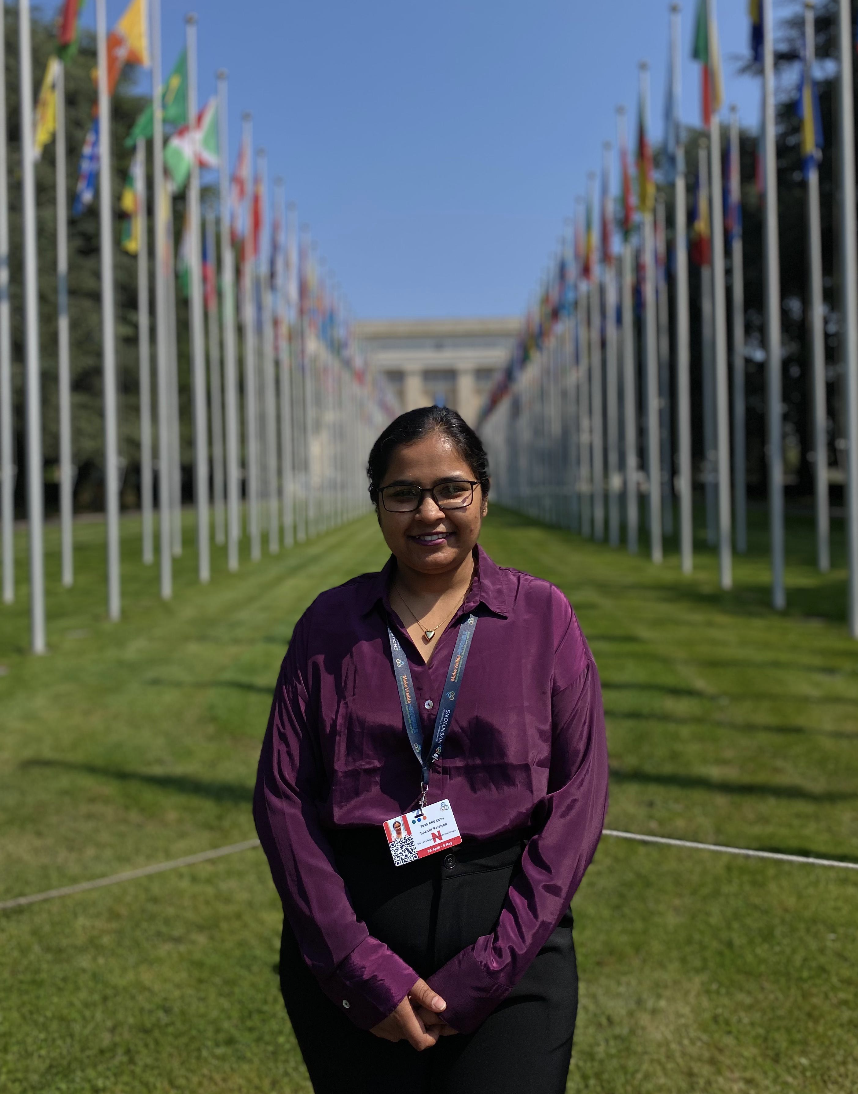
Bella: “Sakshi, it’s so good to see you again. Even though we’ve spoken quite a bit by now, I’ve never actually heard how you found your way to Reserva…”
Sakshi: Yes, so I first met Callie [Broaddus] through another organisation called Youth for Our Planet (YFOP), where she was part of the steering committee. I met her for the first time in Montreal at UNCBD COP15. I was part of the YFOP delegation at COP15 and was intrigued by Reserva’s work, especially as the Dracula Reserve project was in its early stages.
While I was there, I was with Robert delivering letters, speaking to ministers and interacting with Callie and Joe [Wilkins]. I was really interested in working with a group of people who shared the same mindset and passion for conservation, but I also just genuinely really enjoyed the company of Callie, Celina [Chien] and Joe as people and really wanted to work with them in some way. So I thought, why not apply to the Youth Council? I applied in early 2023… the rest was history.
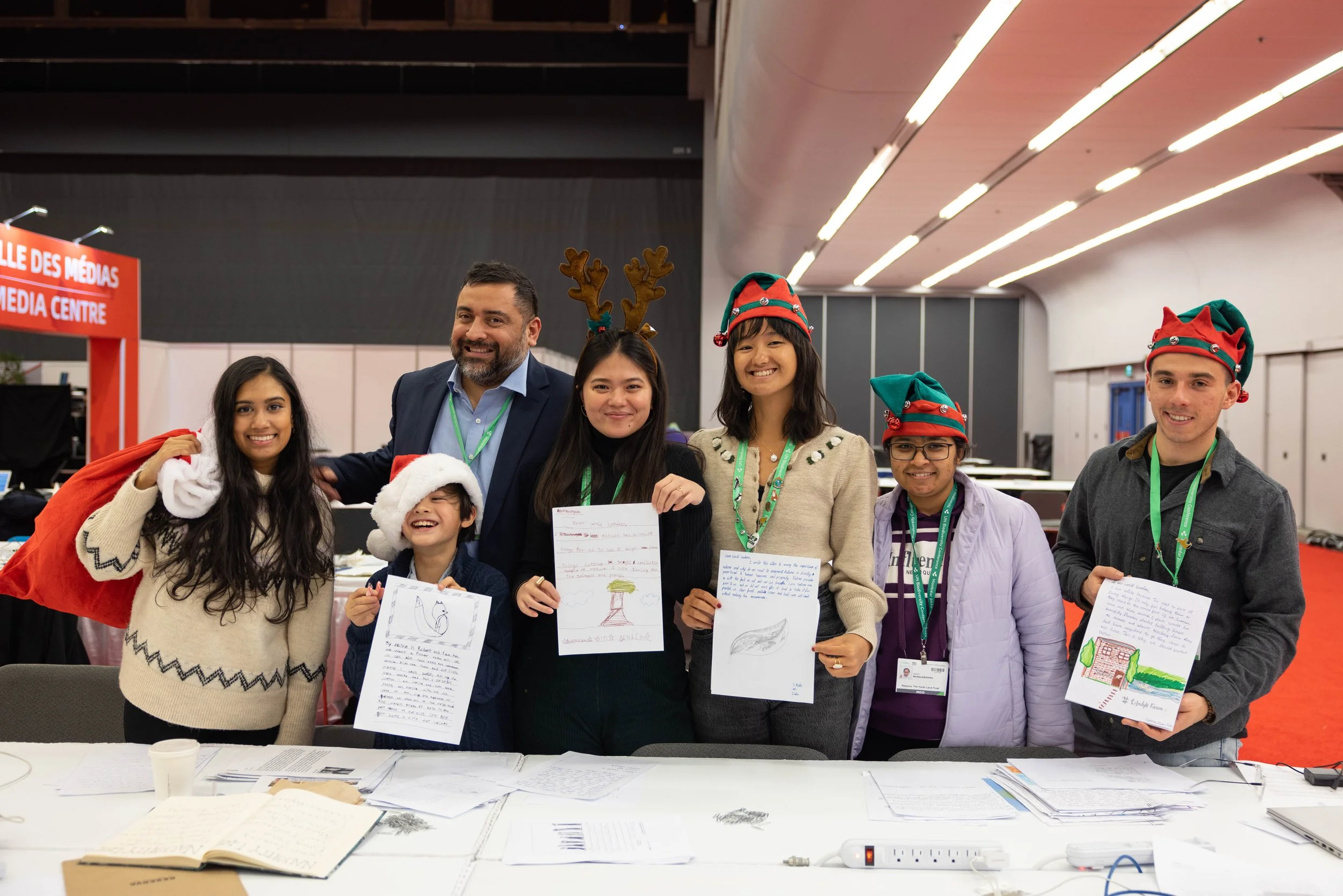
The Reserva delegation preparing to deliver letters from children at UNCBD COP15. Pictured L-R: Sruthi, Robert, Oscar from Avaaz, Yen, Celina, Sakshi, and Jake. | Photo by Callie Broaddus
Your conservation journey must have extended back a fair bit then if you were already at COP 15?
Absolutely, I was already the Global South Coordinator for YFOP. Our main aim at COP15 was to make biodiversity policy accessible and understandable for young people across the world. In the best way I could, I translated complicated negotiations into simpler language that young people could understand and engage with.
Is this a brag … no, I can proudly say I was part of history being made because I stayed up until four in the morning when the Global Biodiversity Framework was agreed!
Initially, my goal was simply to make a difference by synthesising information and helping young people engage with these spaces. It was because of Robert, Callie and Joe that I was also able to engage directly with ministers and decision-makers.
Watching Robert (who was so young!) really gave me the understanding that you don’t have to have a particular background or know the right people to make a difference. You just have to believe in your work and be yourself.
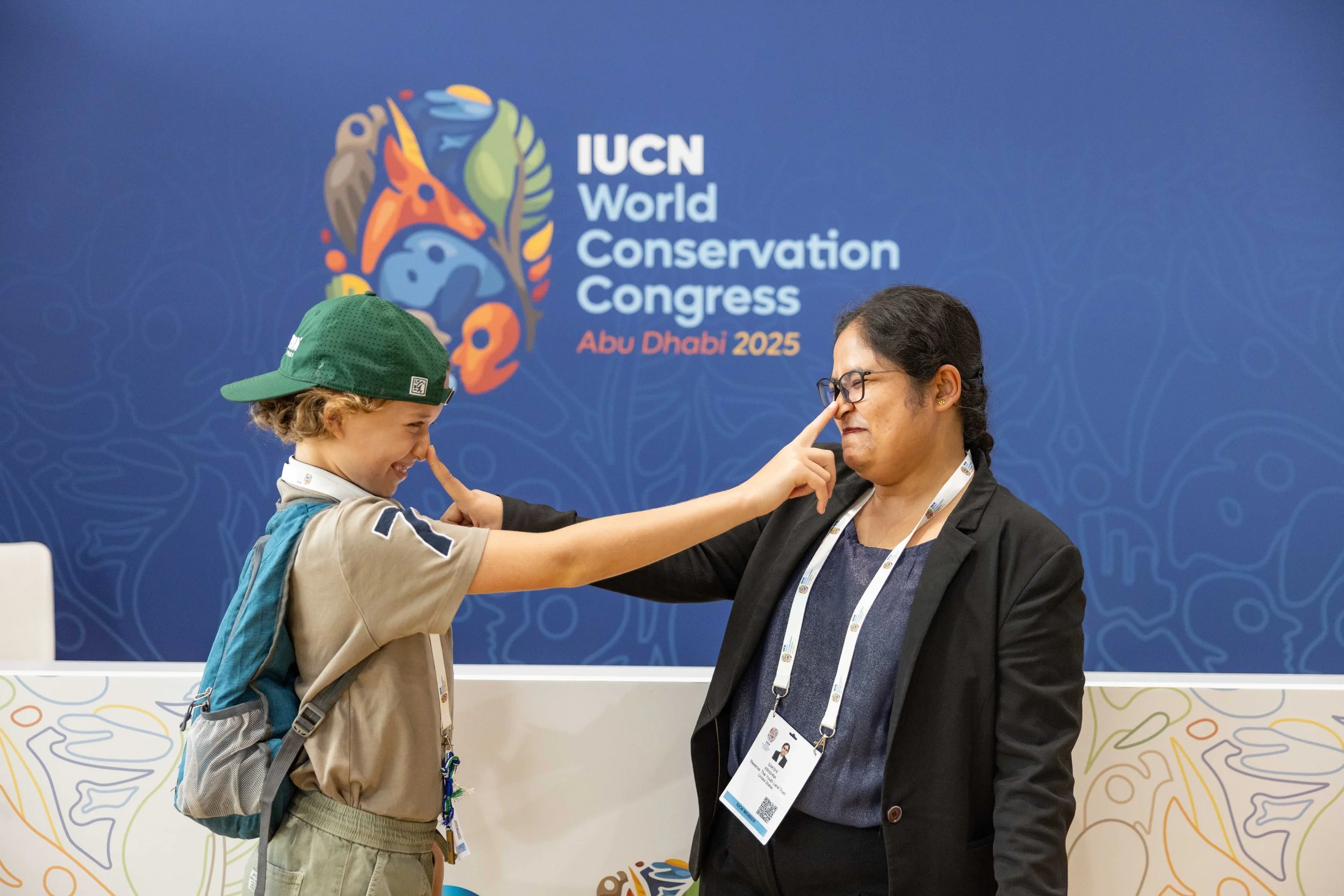
Theo Wrightman-Bixby, age 11, was the youngest voting delegate at the IUCN World Conservation Congress. Theo and Sakshi worked on motions together throughout the week. | Photo by Callie Broaddus
Are the policy processes you’ve witnessed at these international conferences effective, then?
I don’t think we can simply reject these conferences and say they don't make a difference.
Of course there are frustrations. Negotiations take place over weeks, agreements aren't necessarily binding and countries return home and implement them differently.
But unless there’s some kind of guiding principle or shared framework, I don’t think countries would take that first step.
I’m a practising lawyer … policy is my bread and butter! I find these conferences provide that starting point by really helping people to understand what the problems actually are. It also depends on how countries are held accountable afterwards, but I think these spaces create the foundation for those conversations.
Different countries have very different realities and unless representatives from different countries come into these spaces and explain those realities, those problems won’t even be acknowledged.
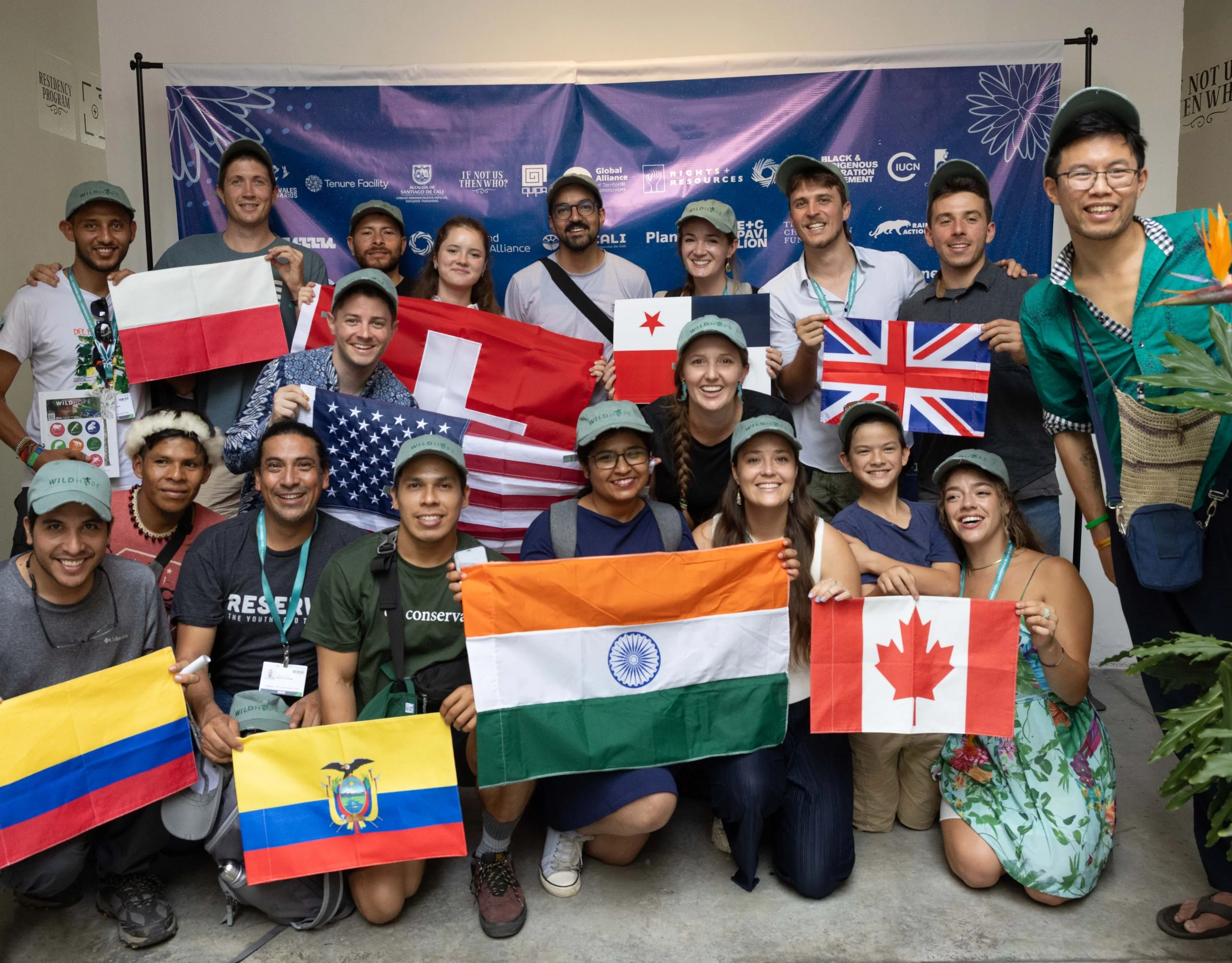
The Reserva delegation co-hosted a screening of two Wild Hope documentaries at UNCBD COP16 to a multinational audience.
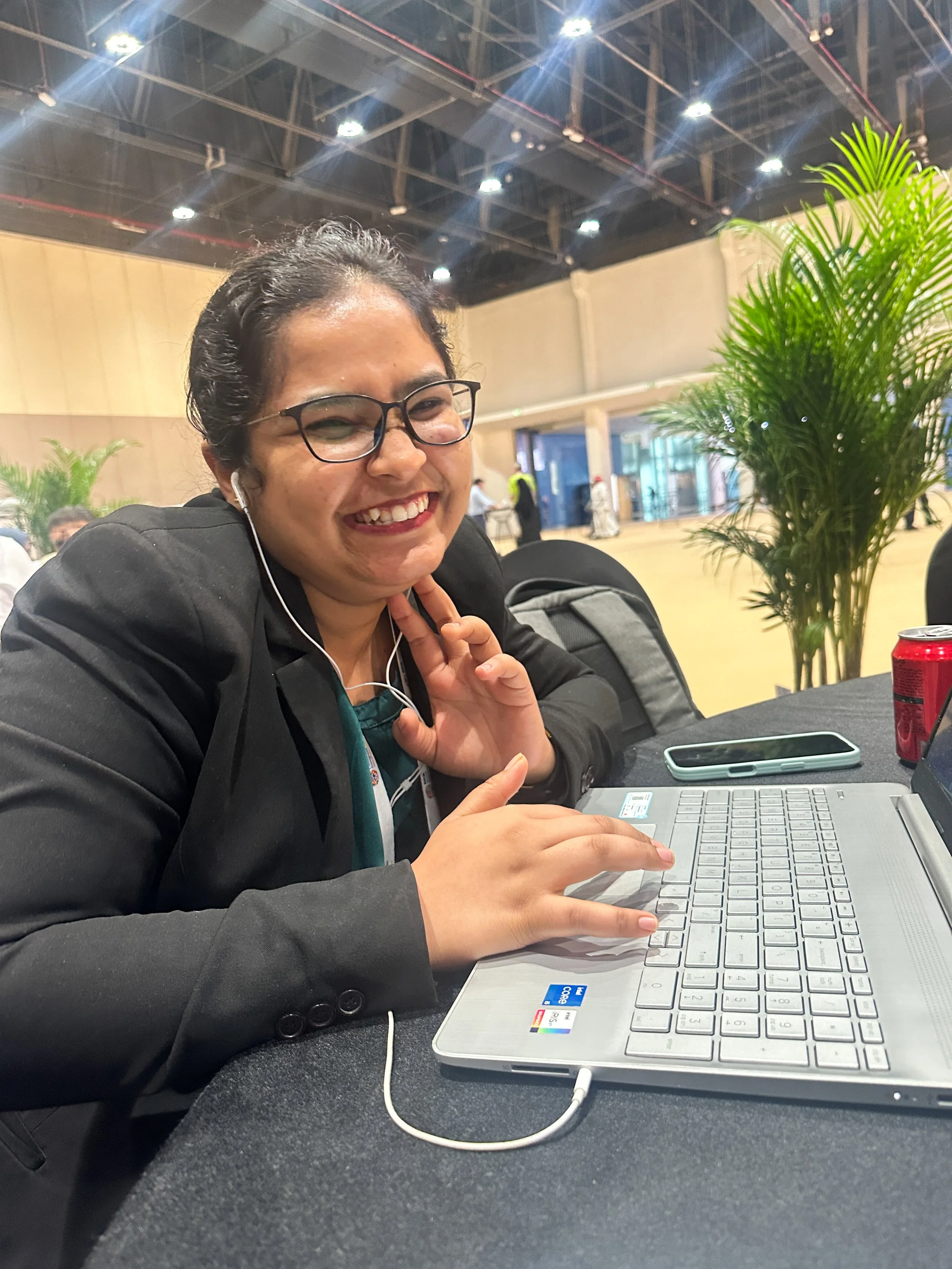
Sakshi’s face after making her first-ever contributions to the wording of a motion, representing Reserva at IUCN World Conservation Congress. | Photo by Callie Broaddus
Ok… you said policy is your bread and butter, you really do make the most of that through your environmental advocacy and action. I’ve heard you’ve been quite instrumental in something called the ‘Nature Pact’?
Yeah - the Nature Pact is a law that I actually drafted myself.
I don't think I would ever have reached that point without inspiration from the Callies [Broaddus and Veelenturf] and Wild Hope. Their stories really, really changed my perspective. Until then, I thought I needed a science background or needed to become a marine biologist to contribute meaningfully. Instead, I realised I could use my own qualifications and legal expertise, and draw from existing scientific data, to create science-backed legislation. It took me over a year to draft.
Wow, it sounds like a complex process. Could you explain exactly what this ‘Nature Pact’ involves?
The Nature Pact is essentially a legal framework I drafted to establish Rights of Nature in practice, not just in principle. It has three main parts.
First, I argue that nature should have legal rights in its own right (not just because it benefits humans, but simply because it exists alongside us). For me, this is about shifting away from a human-centred view of conservation and recognising nature’s intrinsic value.
Second, I focus on implementation. Environmental law today is mostly reactive, where harm is punished after it happens. I want that to change so that decision-making becomes proactive and nature-centred, with someone representing nature involved in policy and development decisions from the very beginning. The idea is that projects should be designed around nature, not treat it as an obstacle.
Third, I set out monitoring and global enforcement. Rights of Nature shouldn’t stop at one country. There need to be systems that hold governments and companies accountable and ensure these principles are actually followed, otherwise they risk being ignored or bypassed across borders.
Overall, the Nature Pact is around 25 articles written in full legal language (as legal as I could make it!), designed as a practical judicial framework rather than just an idea. However, I have realised more recently that before any of this can be implemented, people need to actually understand what Rights of Nature means in the first place.
Interesting, so how do you go about doing that?
So I used a Rights of Nature pilot project. I filed a petition… partly to test the waters and to understand how courts currently think about protecting nature.
If I simply stood before a court and argued that a tree deserves protection because it deserves to live, would people think I’d completely lost it?
The conclusion I reached was that legal thinking remains overwhelmingly anthropocentric (focused on humans).
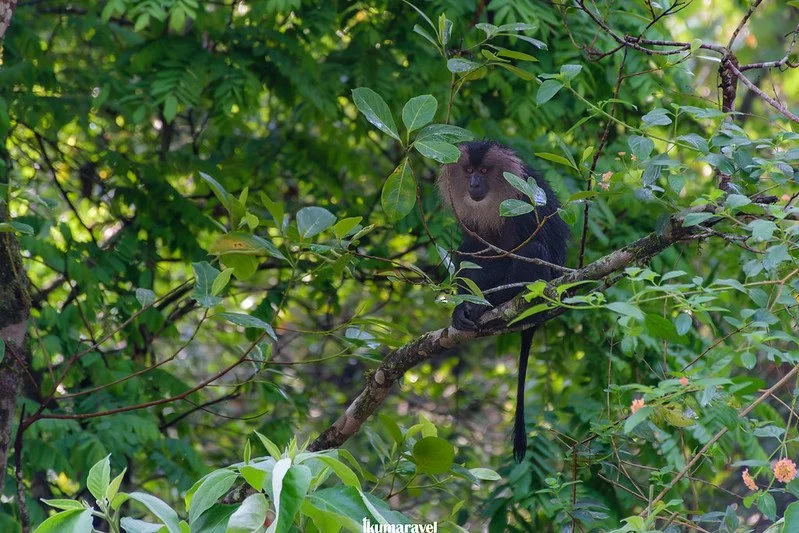
What was the case, and what was the judicial reaction that made you think courts aren’t yet prepared for such a paradigm shift?
There was this major hydroelectric proposal affecting the Lion-tailed Macaque Sanctuary in Karnataka, India. Only around 2,500 individuals remain in the wild.
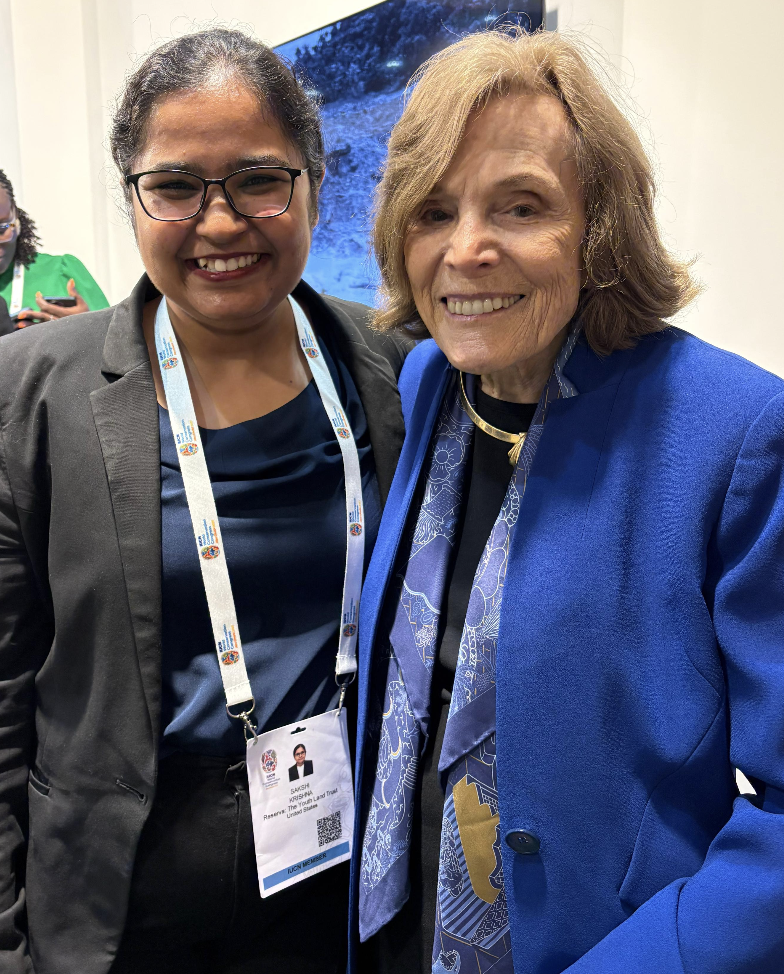
Around the same time, I had just met Sylvia Earle. I never thought that would happen because I've always admired her enormously. Meeting her made me feel that if something so impossible could happen, maybe anything was possible.
That very night I decided I had to do something… I thought, “Why the hell not?”
As a lawyer, I can’t become another researcher. I can't personally generate scientific data. But I can use the work researchers have already done and translate it into policy.
Policy should always be backed by science, and science should always inform policy. There was already strong scientific evidence about the Lion-tailed Macaque population, so I realised this could become a pilot Rights of Nature case. I drafted the petition and showed it to Callie. She really encouraged me to go ahead !
Did you take it to court alone?
No, so I found a senior advocate who normally represents companies like Google and many other major clients. I was incredibly grateful that he agreed to make time for me because he usually charges enormous fees. When I explained the cause, what I had drafted and why nature deserves protection, he simply said, “I’m not going to take any money from you.” He was an absolute rock star in court. He conveyed everything I wanted him to argue.
The only problem was that I didn't think the court was ready. Essentially, the judge’s position, almost verbatim, was, “Let’s deal with humans first and worry about nature later.”
That’s a real pain, so is that the end of the case?
Absolutely not. I've already appealed to the Supreme Court and hopefully it will come up soon. Even if nothing else happens, I hope it stirs up some conversation.
If people don't know about Rights of Nature, they won’t be able to talk about it. If judges don’t know about it, they won’t understand what kinds of decisions they need to make.
I also have to give the judge the benefit of the doubt. Rights of Nature is still a new concept. I don’t think he had ever encountered arguments like these before. Usually environmental cases argue that developments will destroy forests or harm wildlife. Very few people simply argue that nature deserves to exist by virtue of it existing.
One thing I found really interesting happened later. Another person filed a separate petition concerning exactly the same ecological area. The very same judge referred to my earlier case and said that although the court couldn’t do much with my petition, perhaps they could ask me to support the new case with scientific data and then something might be possible.
By that point, I had already filed my appeal.
The other case is much more human-centred and is still pending. If it succeeds, that’s still positive because the habitat would be protected, but the whole point of Rights of Nature isn’t that somebody has to keep filing petitions every time a development appears.
People cannot keep going to court forever, it simply overburdens the courts. The aim must be to change the legal framework itself so that these battles don’t have to keep happening over and over again.
Absolutely. Even if this appeal isn’t a success you will have brought the Rights of Nature into the awareness of the court, the judge and many others, which is undoubtedly a step in the right direction… So just to finish, I hear that you had your very first experience of snow at an environmental conference. Tell me about it!
YES, the first time I saw snow was in Montreal. It was my first trip abroad and my first time travelling completely by myself. I kept checking the weather because I desperately wanted to experience snow, but the forecast kept saying it would snow on the day I was leaving, so I was just really disappointed.
I was 22 years old and had never seen snow.
We had been attending an event and I walked outside convinced I was going to miss it. Then, the very moment I stepped outside, it started snowing. I genuinely felt like I was God’s favourite child. I caught my first snowflake and then it suddenly became a really heavy snowfall.
There are videos of people filming me as though I was some kind of Montreal attraction, but I was just making snowmen. Montreal already had this beautiful French architectural character, but once everything was covered in snow it became an entirely different place.
Sakshi, you’re brilliant! I hope your appeal is successful and I have a feeling you are going to be a big part of the Rights of Nature reform that is about to happen. Let’s hope you see some snow again soon…
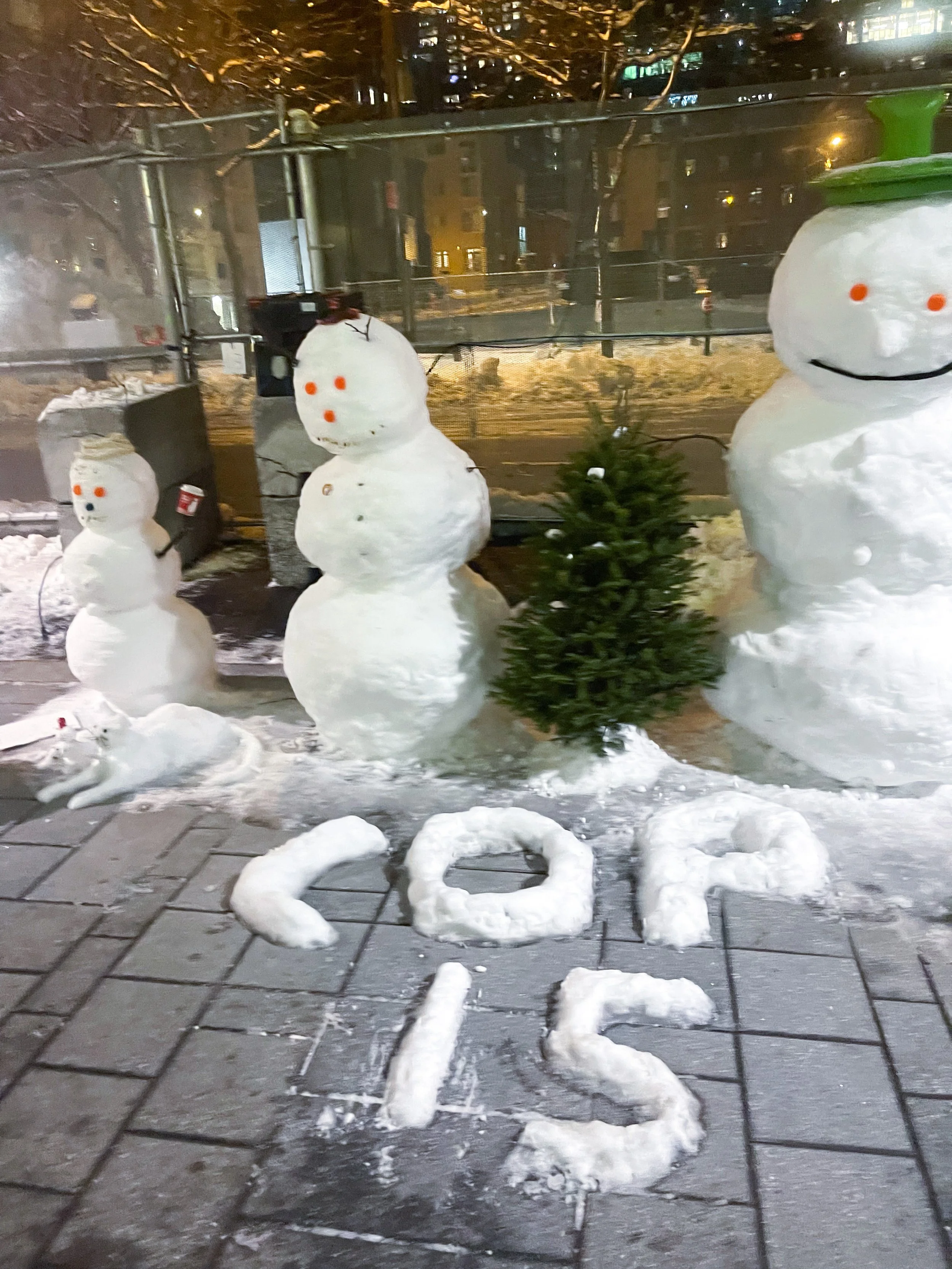
Evidently, others were excited about the snow, too!
Bella Lack is a conservationist, author, and co-founder of Reserva, where she helped build our global Youth Council. For our In Focus series, Bella speaks with Youth Council members about their conservation journeys, the challenges they face, and the future they are working to create.