In Focus: Erfan Firouzi
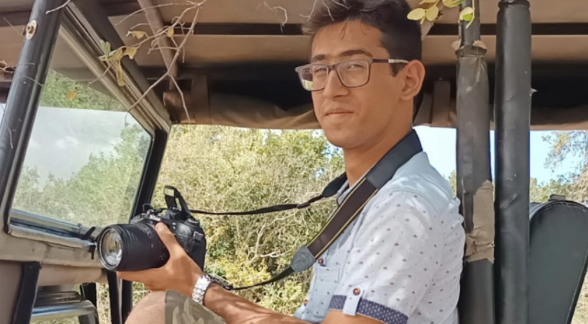
Erfan Firouzi is an Iranian conservation storyteller, artist, environmental science student, Reserva Youth Council member and, now, an author. A pretty extensive list of roles which he manages to seamlessly switch between. I spoke to Erfan–who is currently studying at Monash University in Australia–about being raised in Dubai and inspired by childhood visits to his grandparents in Shiraz, Iran. Despite growing up in Dubai’s burgeoning metropolis amidst towering slabs of glass and concrete, he spends his time reconnecting its urban communities with the pockets of nature (that he insists do exist) through storytelling, biodiversity education, art and youth engagement. As part of this mission, he also founded biodiversity boot camps designed to help young people notice, and therefore value the ecosystems around them.
This interview was particularly special because it celebrates Erfan’s recent recognition as a National Geographic Young Explorer; a programme through which, each year, the National Geographic Society selects 15 emerging leaders who represent their key focus areas. Personally, growing up in a city and managing to hold onto a deep love of nature, I found Erfan’s story hopeful in his ability to do the same, and now his deep commitment to unearthing that same passion in others.
Bella: Erfan, you’ve spoken before about how your grandfather and your visits to Iran shaped your view of the natural world. What was it about those experiences that was particularly pivotal in your relationship with nature?
Erfan: I grew up in Dubai, which people usually associate with skyscrapers and cities rather than nature. So my connection to wildlife really came from visiting my grandparents in Shiraz during the summers. My grandfather is an electrical engineer, but he’s deeply enamoured with plants and wildlife. Whenever we drove together, he would tell me stories about travelling through deserts with his father, who was a truck driver.
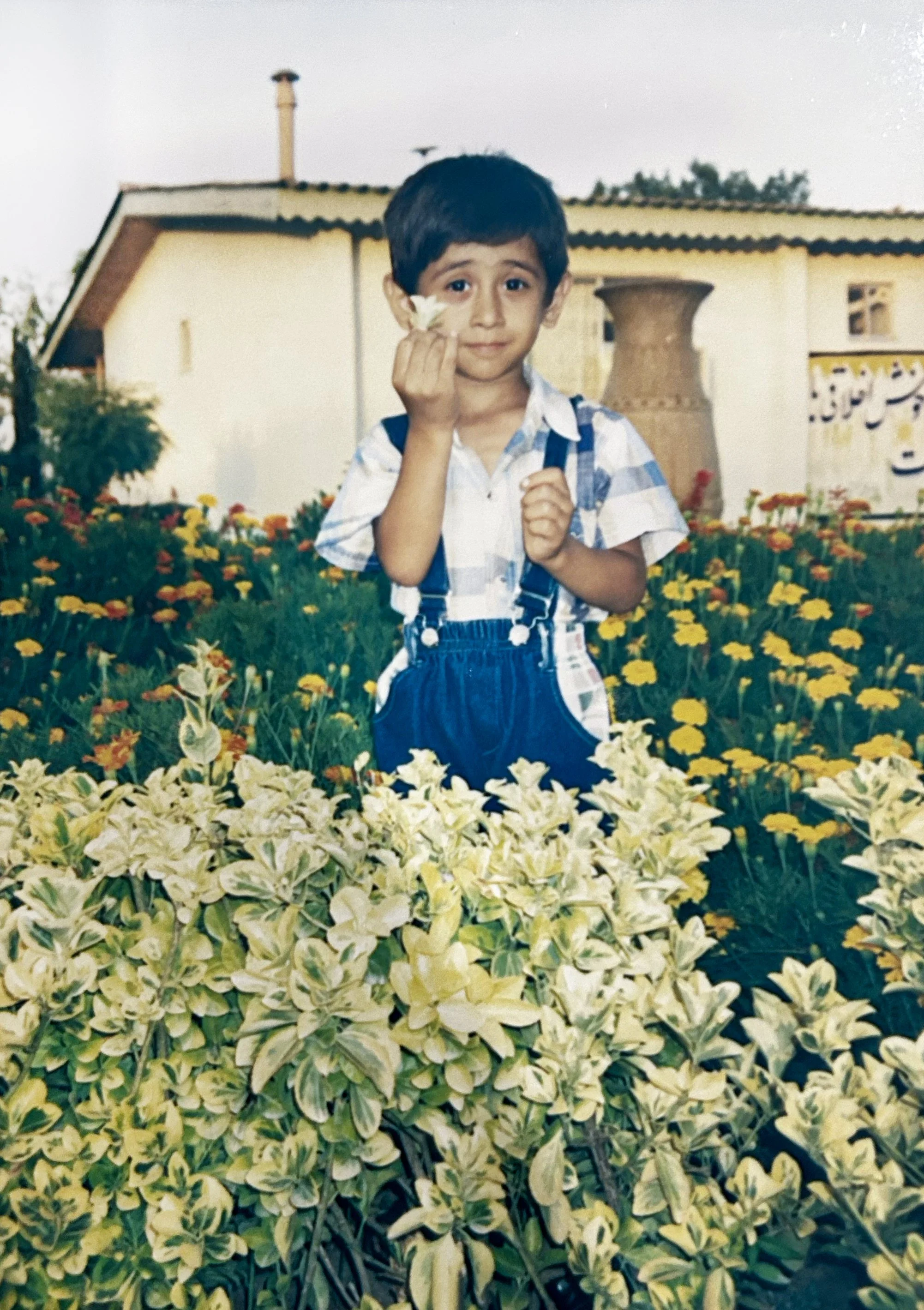
Erfan as a young boy in Iran
He’d talk about seeing hyenas, wild boars, even once an Asiatic cheetah. Personally, I never saw any of those things because the city had expanded massively since then, a lot of the wildlife had disappeared.
I think it was hearing those stories which made me want to search for nature myself. I wanted to go out and see these animals that my grandfather had known. And I was determined to find nature in Dubai, too, even though most people assume there isn’t any there.
So despite seeing how significant the decline of nature has been since your grandfather’s childhood, you talk a lot about hope and inspiring hope in others. How do you stay hopeful?
Because I’ve seen nature recover.
There are places in Dubai that used to be completely devoid of life apart from invasive species. But now, because artificial lakes and wetlands have been created, migratory birds have returned. I counted around 35 species of water birds in some areas this year. There are people who think Dubai is just desert and heat, but if you slow down and notice, there’s life everywhere. That’s actually why I started my biodiversity boot camps. A lot of people think they’re connected to nature because they go camping or own farms. But nature reveals itself everywhere when you slow down and notice.
For people who aren’t interested in wildlife, everything just looks like a pigeon. Then suddenly they realise there are hedgehogs here, migratory birds here, whole ecosystems they’ve never noticed before.
You seem hopeful about nature’s ability to regenerate, but more conflicted about humanity as a species, and our relationship with nature…
I think people can care deeply, but they need to feel connected first. If you don’t show people how their own lives depend on ecosystems, they won’t protect them.
A lot of people approach conservation by talking only about polar bears or forests far away. However, I have seen how people become engaged when they realise the degradation of nature affects their own air, food, water, children and health. That’s when it becomes incredibly personal.
At the heart of almost everybody is this dream of retiring somewhere surrounded by nature. So I think the connection already exists; it just needs to be awakened by communicating the personal impacts of ecosystem degradation.
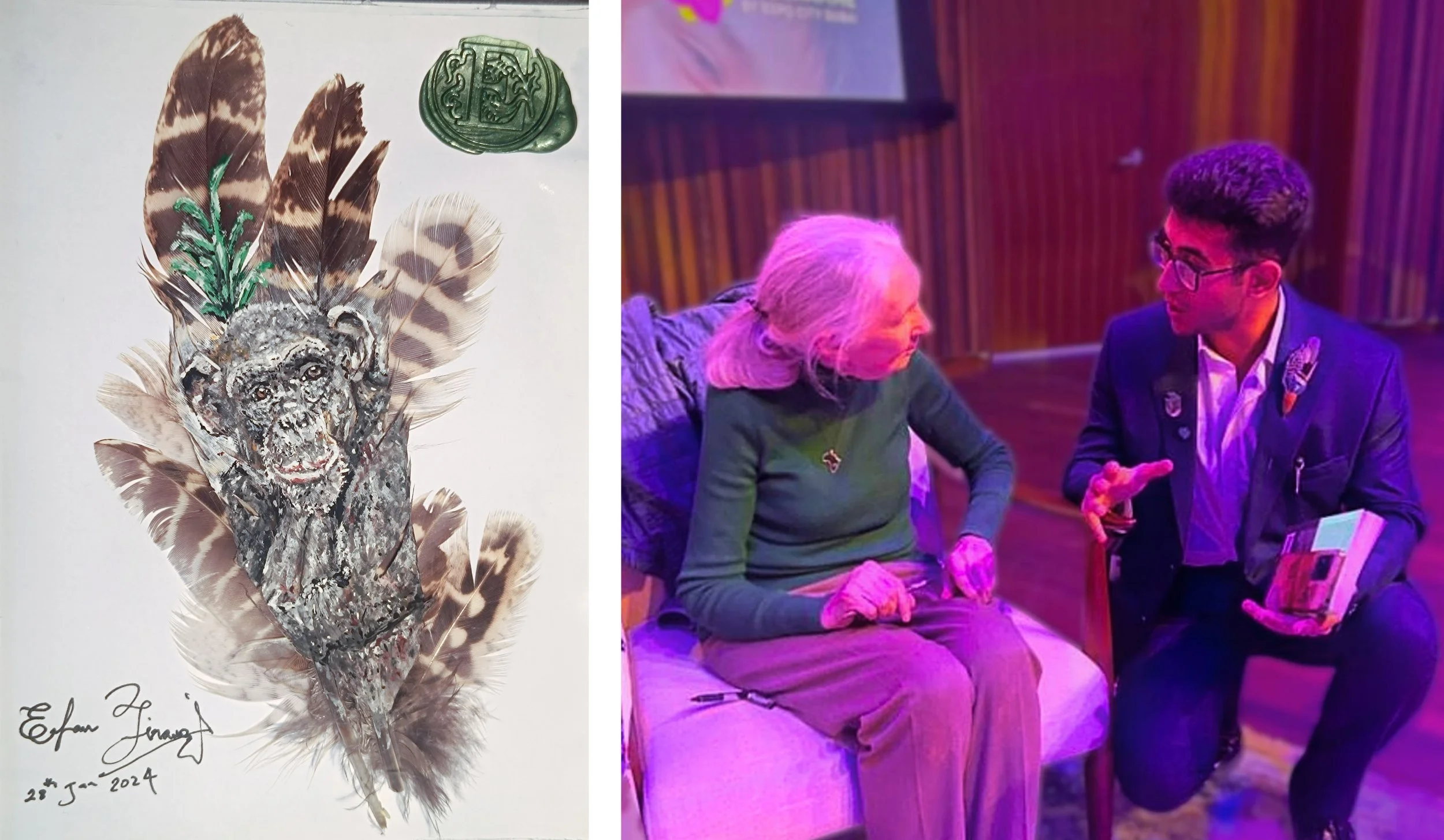
A feather painting Erfan presented to Dr. Jane Goodall
In your attempts to do this you’ve experimented with multiple different ways of communicating environmental issues; books, painting, music. Why is art so important to your advocacy?
Because people connect to stories differently. Some people read books, some watch videos, some respond to music or art.
I started painting animals on feathers before meeting Dr. Jane Goodall through the Roots & Shoots programme. I wanted to create something meaningful for her. And when she saw the painting, the way she reacted really stayed with me. It was one of the few pieces of art she took home with her!
People ask why I paint on feathers specifically. It’s because feathers are fragile. So when you paint an animal on one, you’re showing both its beauty and its vulnerability. Art is nature. Music is nature. Everything we create ultimately comes from nature.
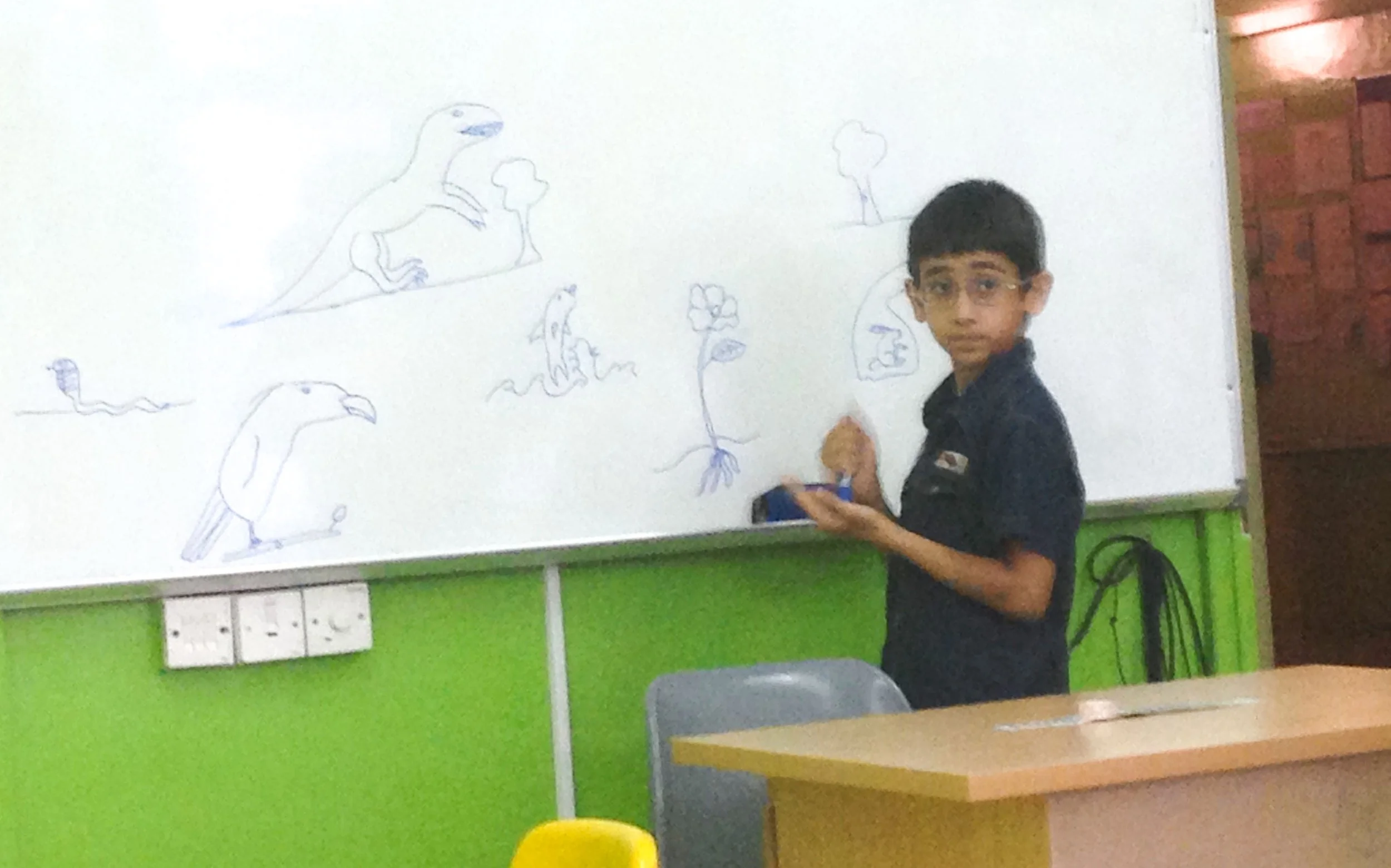
Some of Erfan’s earlier creations gracing the school whiteboard
You’ve also criticised environmental conferences quite openly. Why?
Because I think many of those environmental conferences have become disconnected from people. You see the same faces repeating themselves at climate conferences, having the same conversations… again and again. Of course policy matters–we absolutely need laws and regulation–but I don’t think conferences alone create connections. If people themselves change, governments will have to change too. If entire populations demand different systems, leaders won’t have a choice. That’s why I think storytelling and community matter so much.
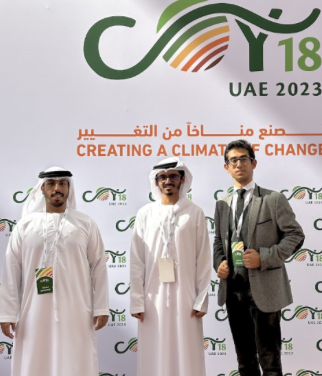
Erfan at COY 18 in 2023
And, talking of community, you are a youth council member for Reserva, where we value our community as one of our pillars of youth empowerment and engagement. Have you found that beneficial for your work?
Yes, well I believe community is the most important thing you can have. Especially for us, because with all the pressures on our shoulders being on the front line… in the war zone, we need community to guide us, to give us hope, and to keep us inspired…
I signed up for Reserva during COVID because I saw Benjamin Fallow talking about it. To be honest, Reserva was the first group that I ever joined. I was able to see firsthand the work of people like Callie, and when someone as active and as passionate as Callie has hope and faith in you, you know that what you do matters. In fact, Callie’s recent nomination of me for the National Geographic Young Explorer was testimony to the importance of creating a community of nature protectors which support and uplift each other.
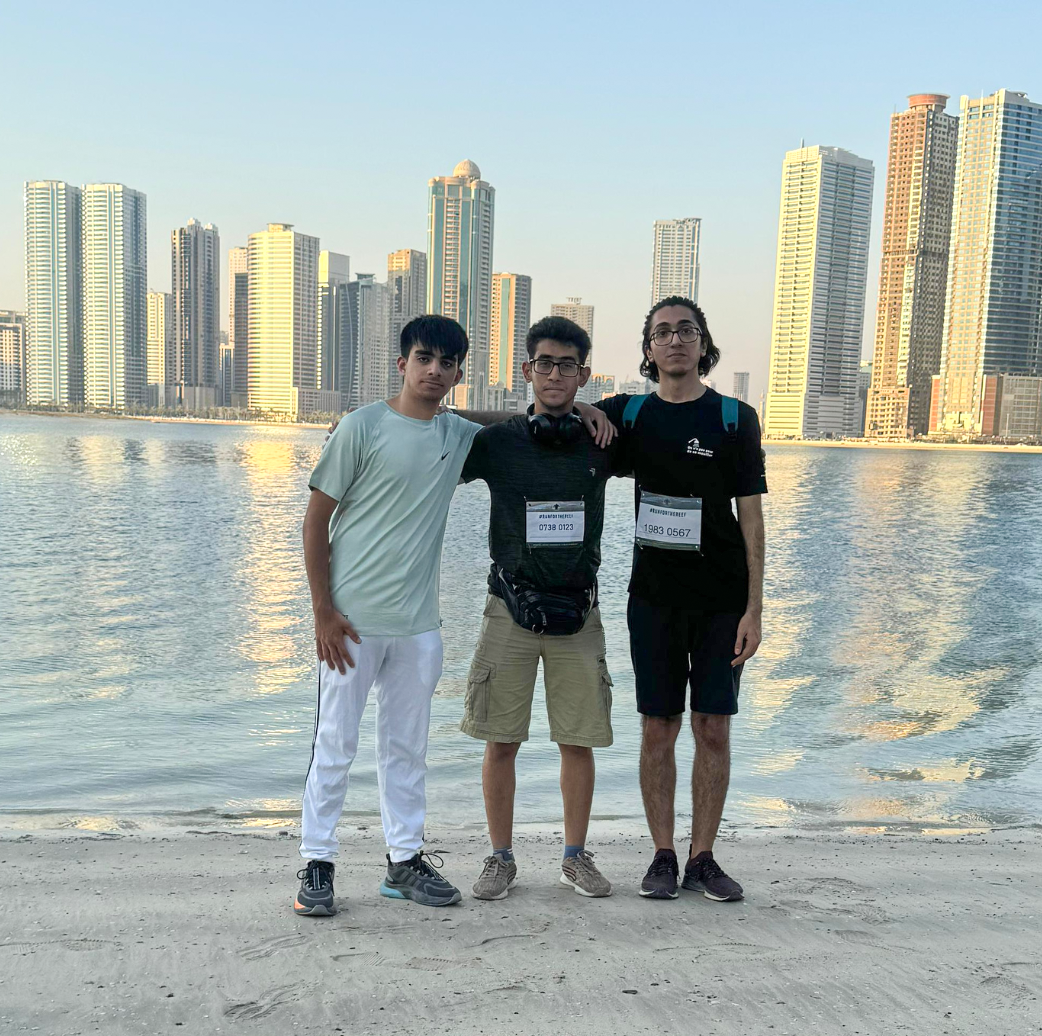
Erfan and his friends Abtin and Muhammad won the Longest Cumulative Distance prize in our Run for the Reef fundraiser. Over multiple efforts, they ran 108km, conducting a bioblitz and a beach cleanup along the way!
Yes, huge congratulations on recently being named a National Geographic Young Explorer !! What do you hope to do with that opportunity?
Honestly, I was so shocked… I even thought they’d emailed the wrong person. I want to use their support to expand my biodiversity boot camps, especially in Dubai, because that’s where I see such a huge disconnect between people and nature. I want young people growing up in cities to realise wildlife exists around them too.
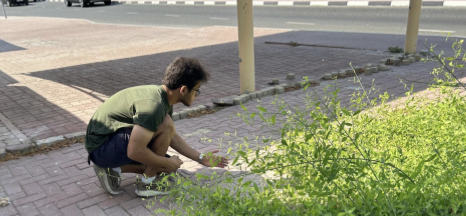
Erfan searching for wildlife in the UAE
My dream would be to create cities where nature comes back into people’s daily lives. Instead of driving into the desert just to see a hedgehog, maybe one day those young children will be able to see one in their own neighbourhoods again.
Bella Lack is a conservationist, author, and co-founder of Reserva, where she helped build our global Youth Council. In this series, she speaks with Youth Council members about their conservation journeys, the challenges they face, and the future they are working to create.